A crate, a state to recreate
A crate, a state to recreate
6–8 November 2026 | Duo-exhibition at INDEBT, Amsterdam
Artists Stéphanie Baechler (*CH) and Charlotte Eta Mumm (*D), both based in Amsterdam, bring together works, studio archives and material remnants in a duo exhibition exploring fragments, discontinuity and the re-use of materials. Through reworking and recombining what is already there, they create new relationships between materials, ideas and works.
A CRATE, A STATE TO RECREATE
Fragments are incomplete parts of something larger. They can result from a fall, from pressure, a force applied to a body or material that deforms, densifies, or breaks. Fragmentation is not only a physical condition but also a mental and temporal one: a state shaped by constant demands that push us at times to the limits of our capacities. As artists, we navigate multiple roles and a hybrid daily life. We move between private responsibilities like parenthood, personal challenges, growing obligations and our professional practice, which requires focus and continuity. This constant shifting leads to discontinuity, to fragmented days and thoughts. It can be tiring and precarious, but it is also productive: we continuously act and react, connecting and disconnecting fragments - forming something like synaptic constellations.
Generously supported by AFK (Amsterdamse Fonds voor de Kunst)
Pictures by INDEBT
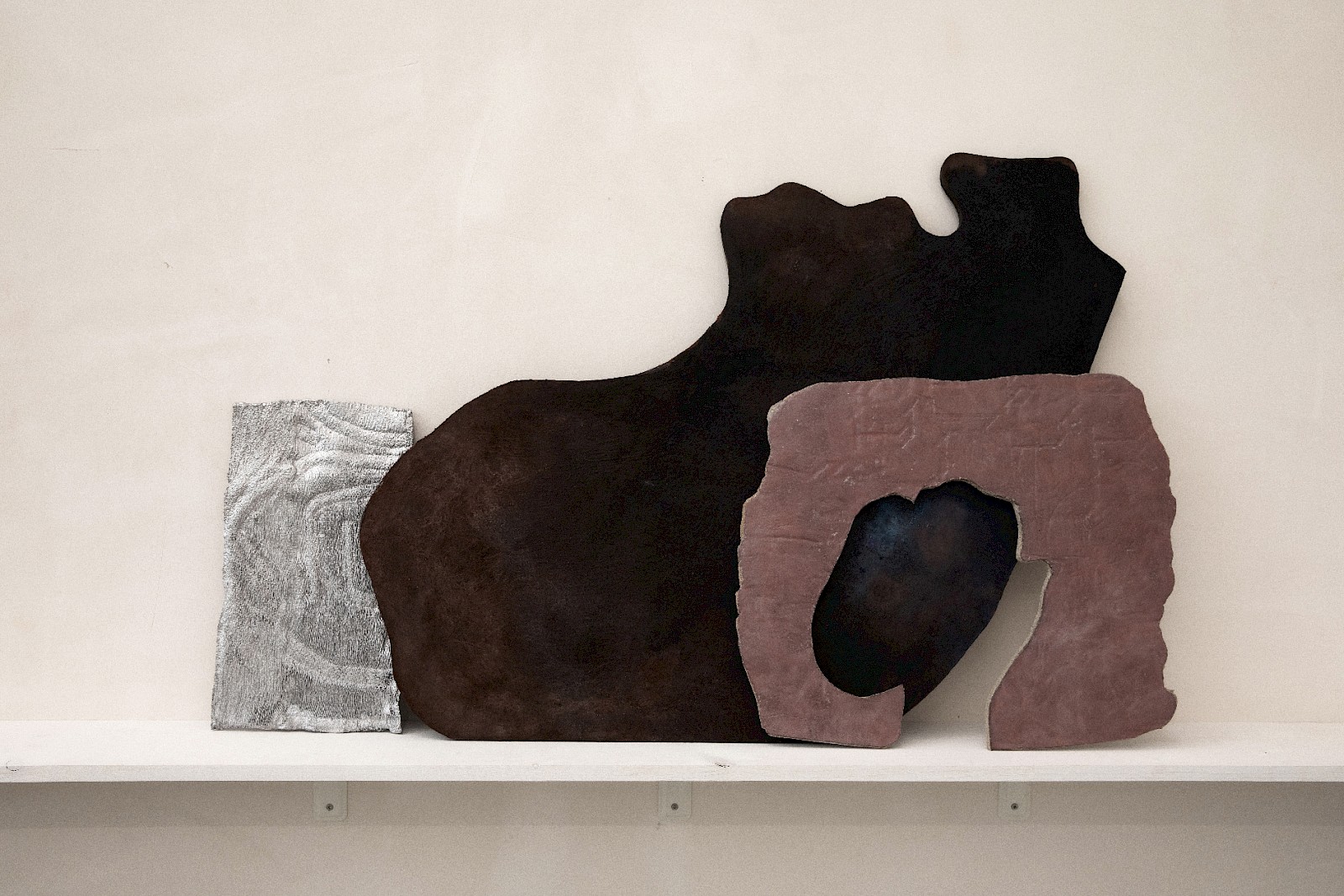
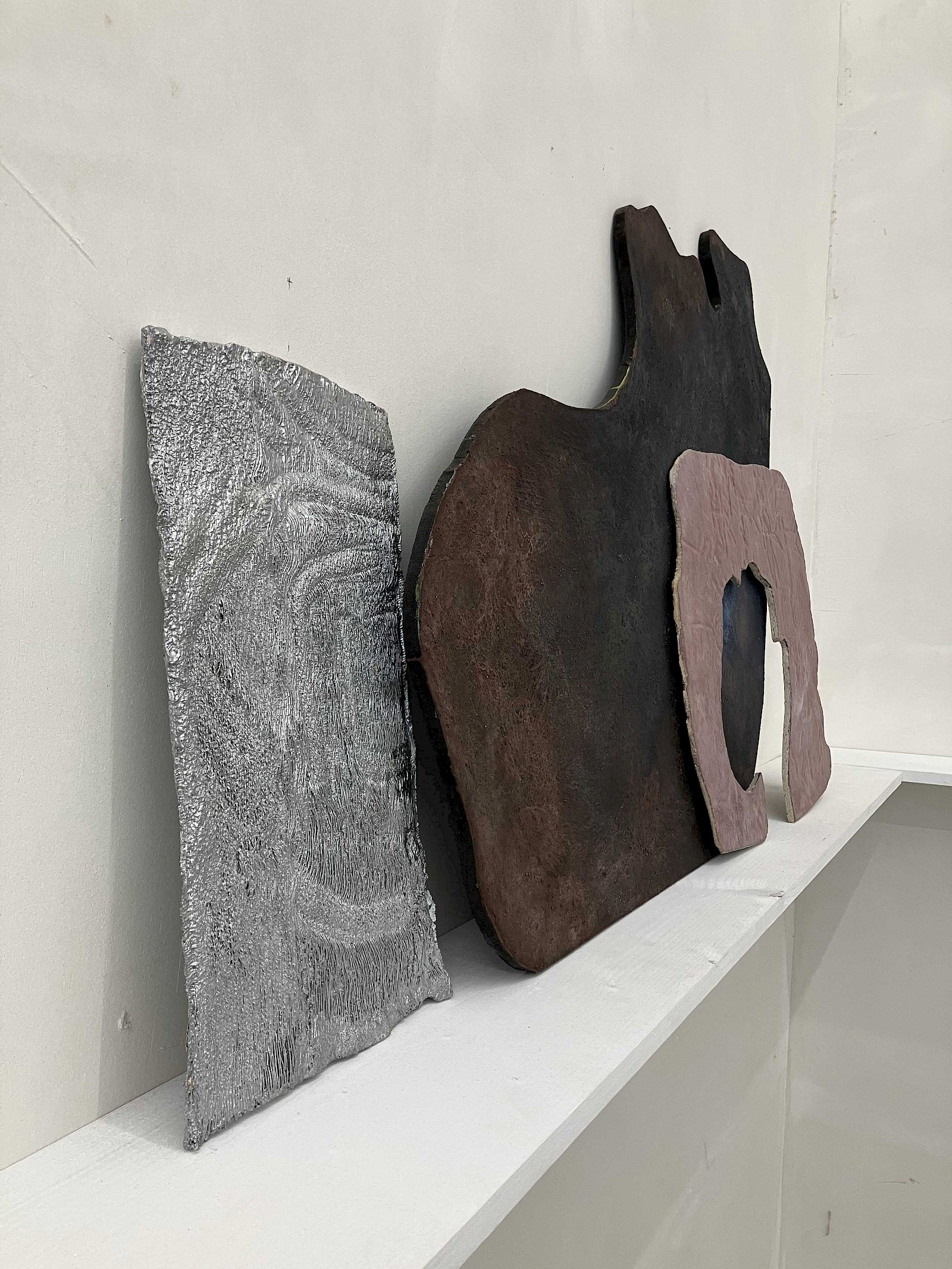
Aluminum cast, wood, ceramics
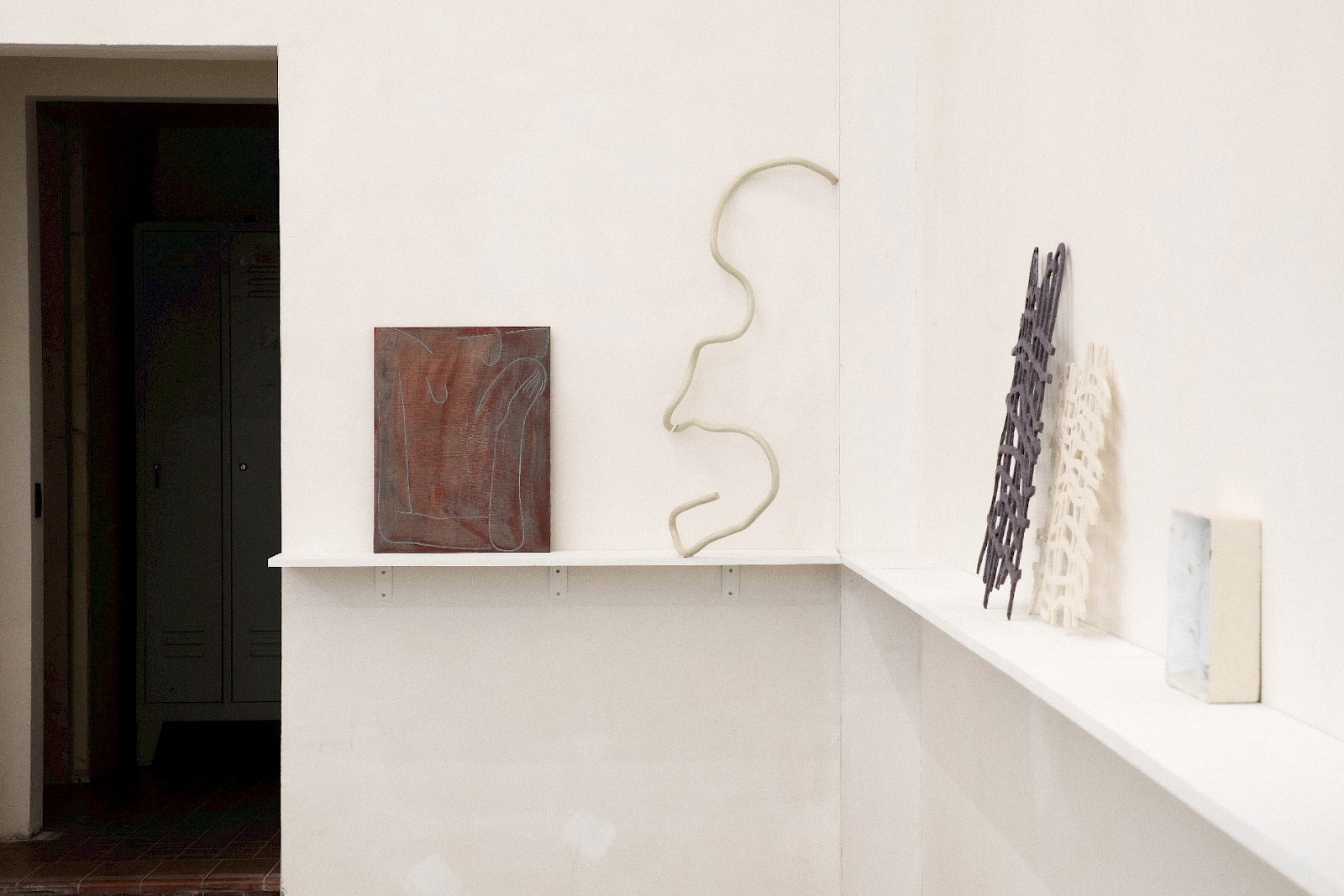
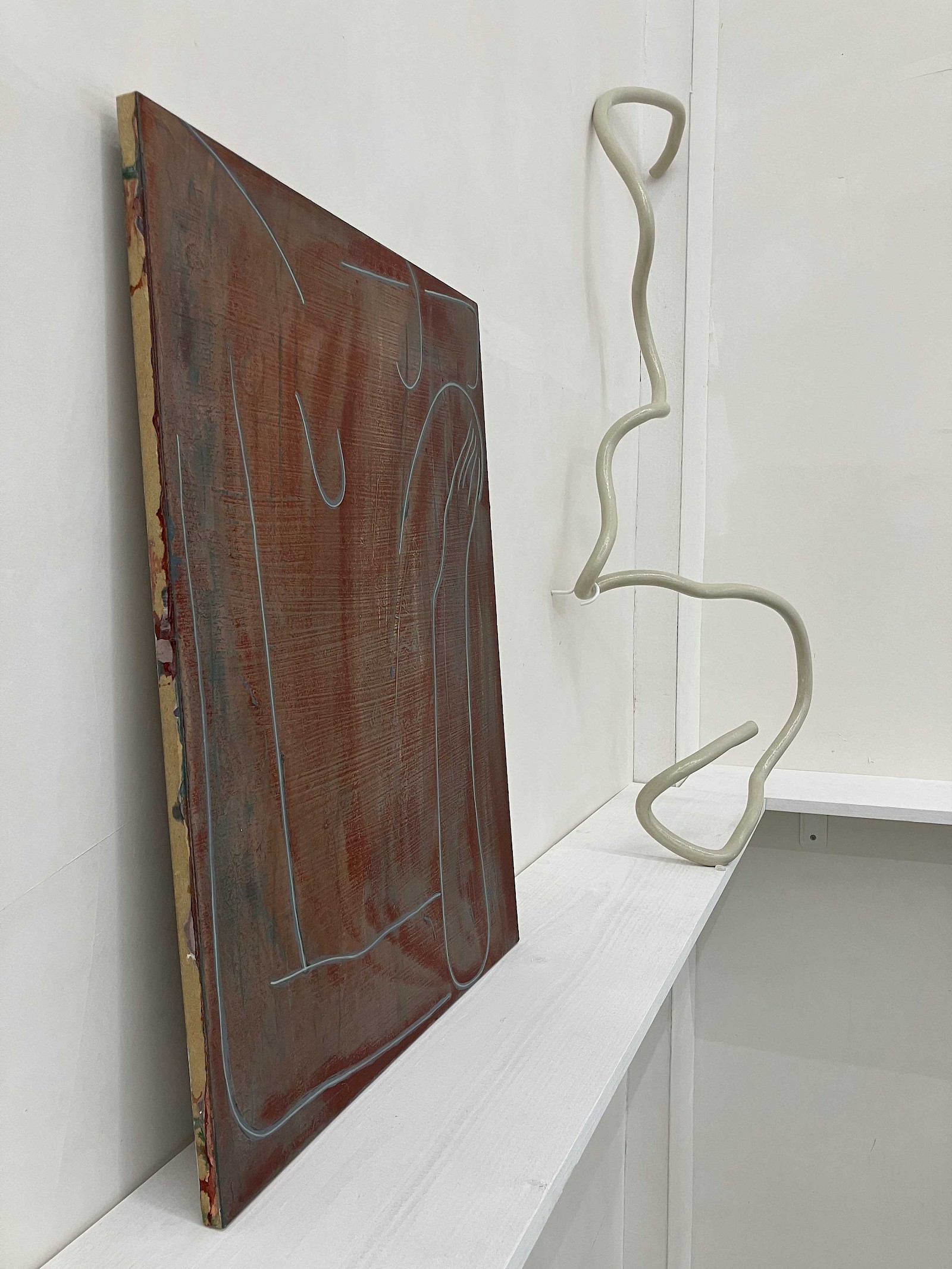
Painting, ceramics
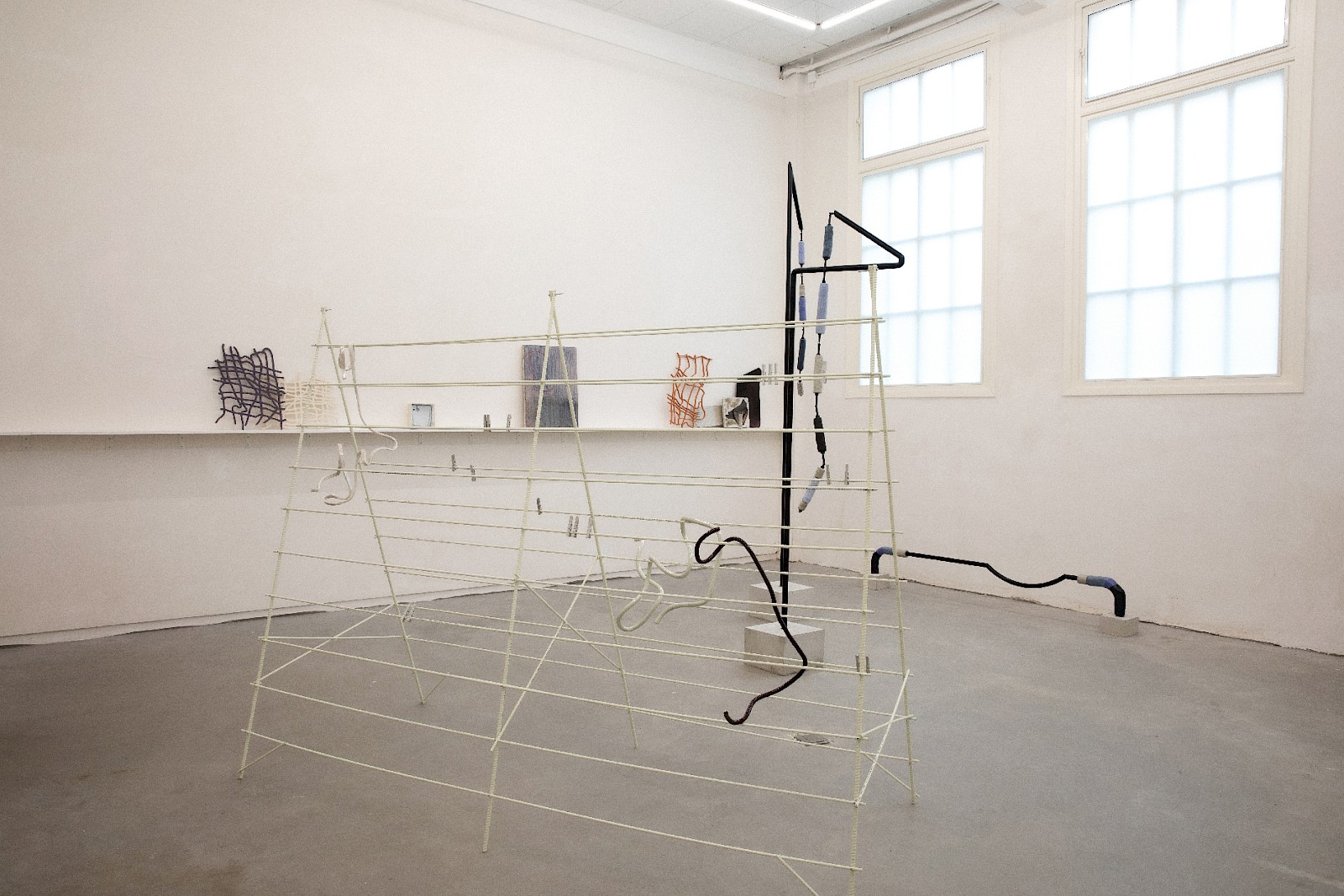
Installation view
The title a crate, a state to recreate reflects this condition. A crate is both a storage structure and a temporary container: a place where things are kept safe, set aside, or transported. It suggests an archive of materials, ideas and works that are not fixed, but waiting. A state, in turn, describes a condition of being: provisional, shifting and open to change. To recreate is to return to these stored fragments and rework them: to take what is already there, refine it and bring it into a new relation.
For this exhibition, we work with what we have: materials and works from our studio archive, as well as leftovers and remnants from previous processes. Through re-use and re-working, these fragments are not simply recycled but reconsidered and redefined. They carry traces of earlier contexts while being reactivated in new constellations.
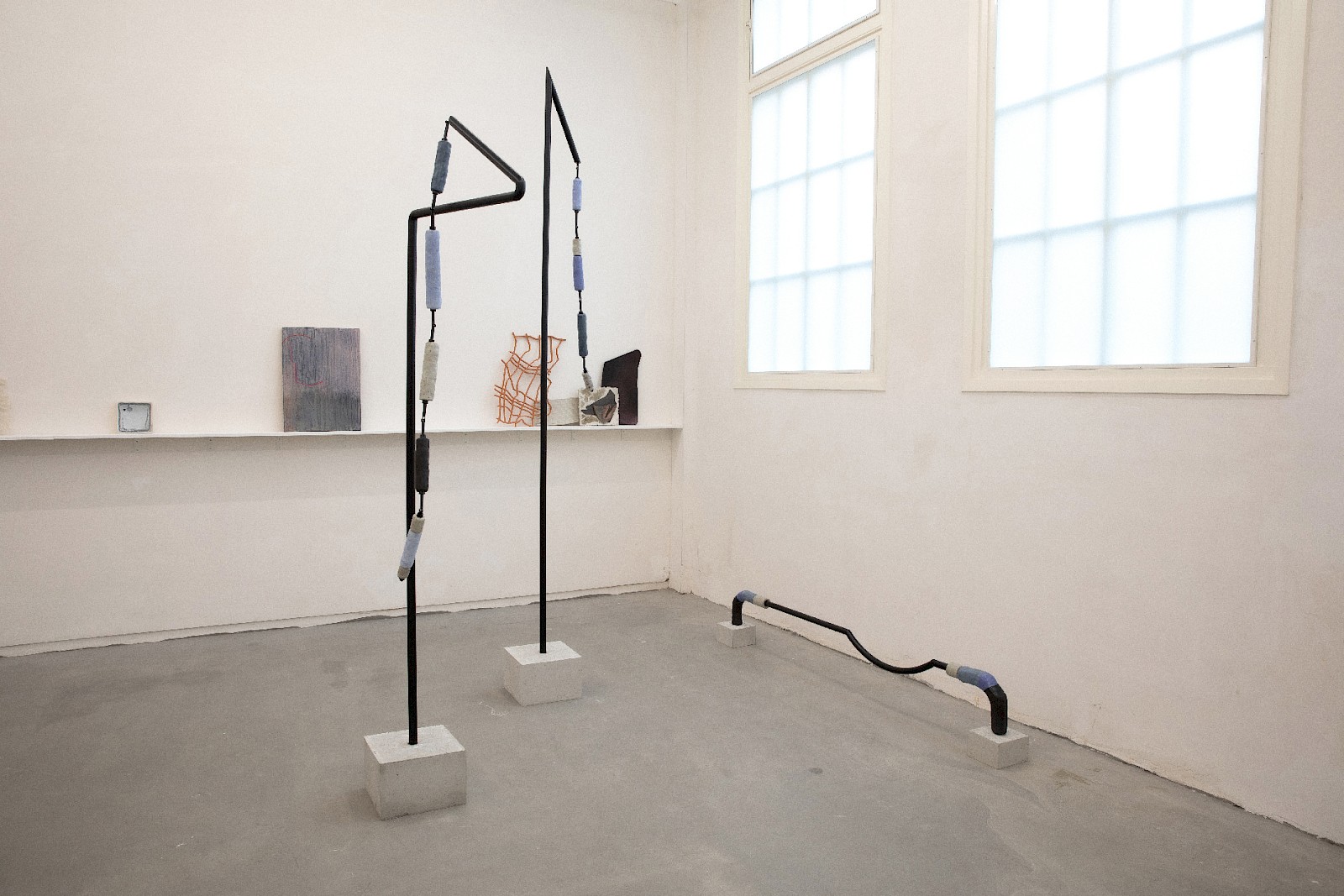
The architecture of COMMONS, originally a school building, supports this approach. The large window front facing the Govert Flinckstraat creates beautiful light, while the compartments of the windows provide a clear structure. This compartmentalization returns as a horizontal frieze around the walls, using simple clip frames and picture shelves. It formally unites the different fragments of Baechler’s and Mumm’s work.
Alongside this structure, sculptures, remnants and tapestries will be carefully positioned throughout the space. The exhibition thus becomes a place where fragments are held, revisited and brought into relation, forming a temporary whole.
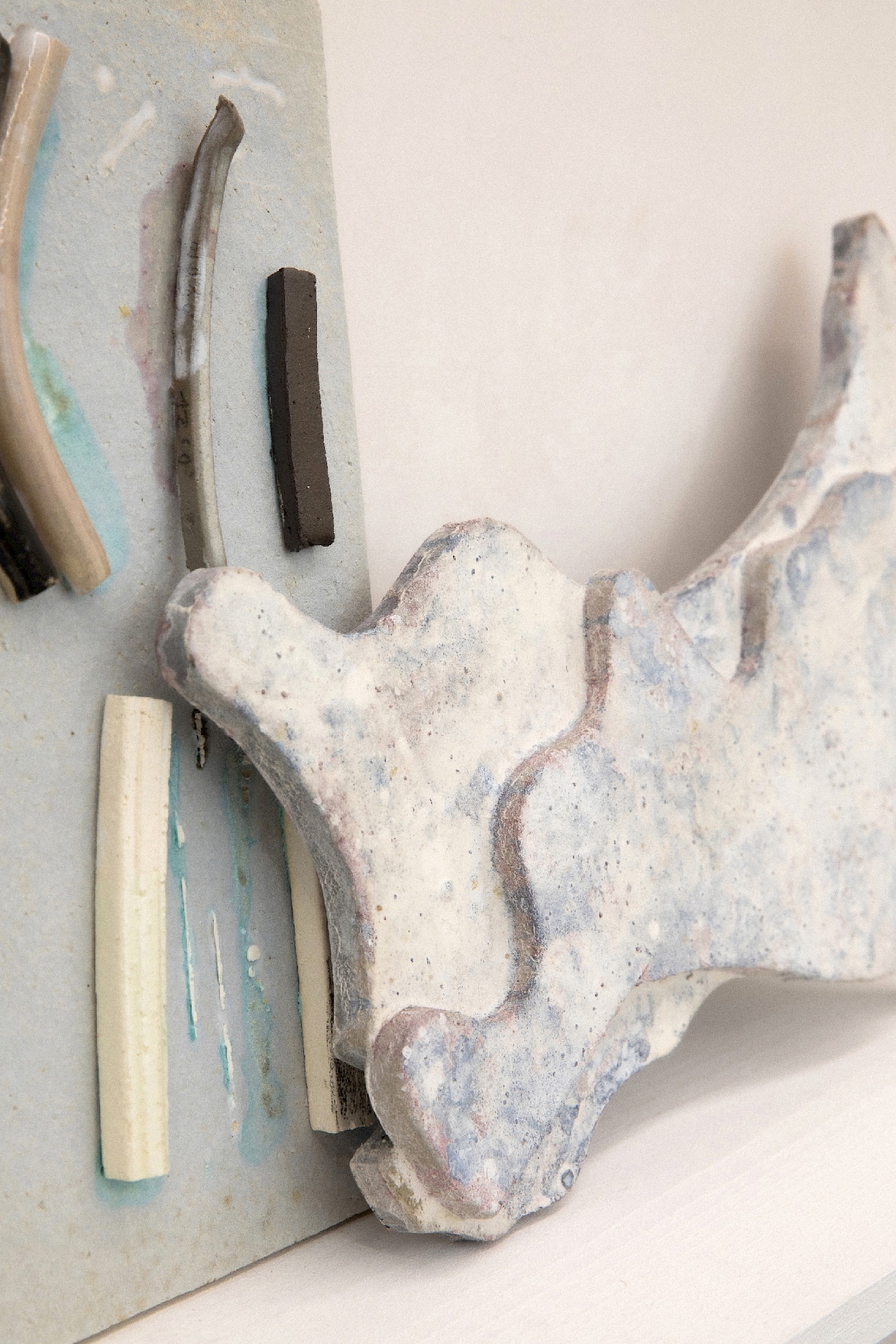
Ceramics, wood
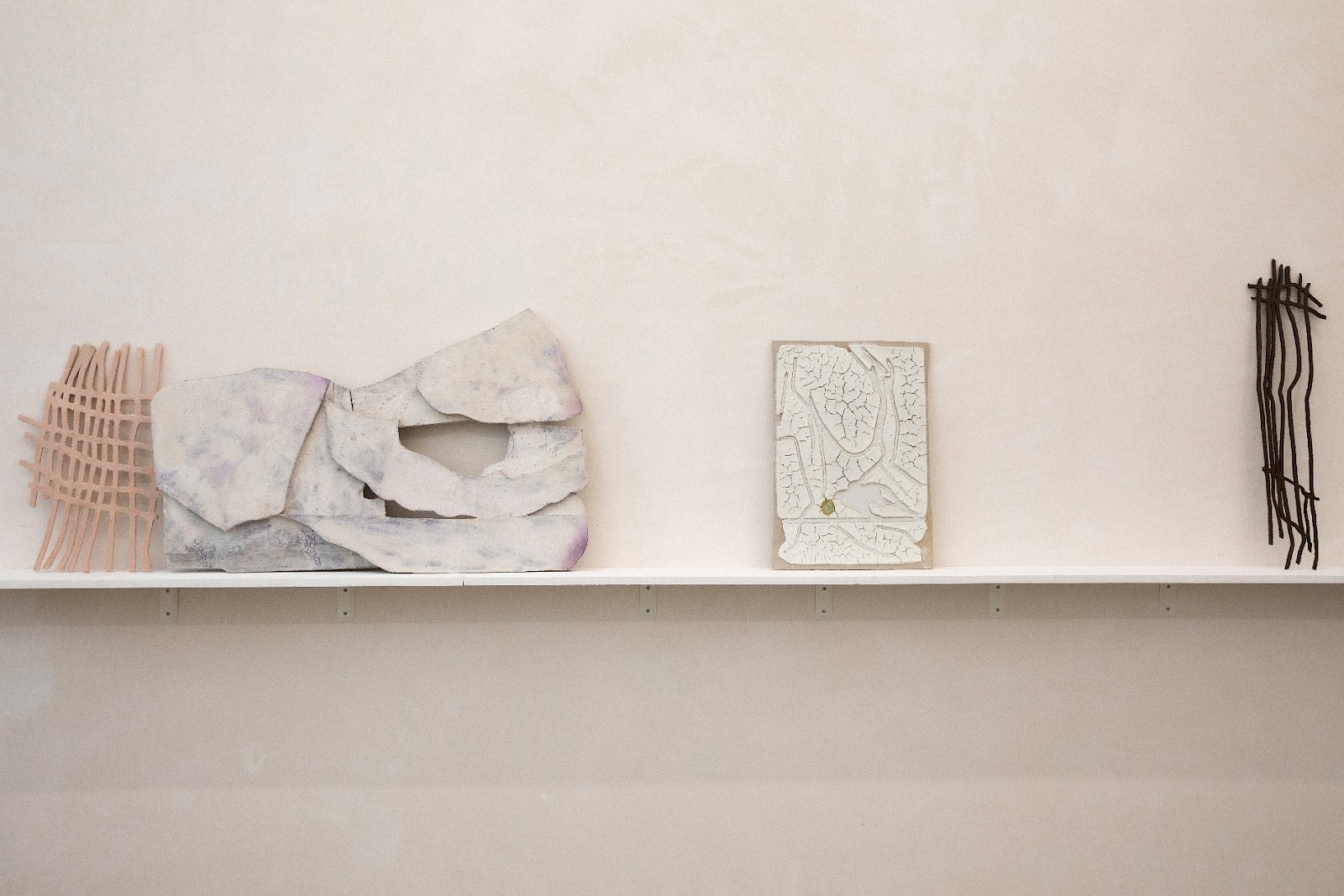
A crate, a state to recreate
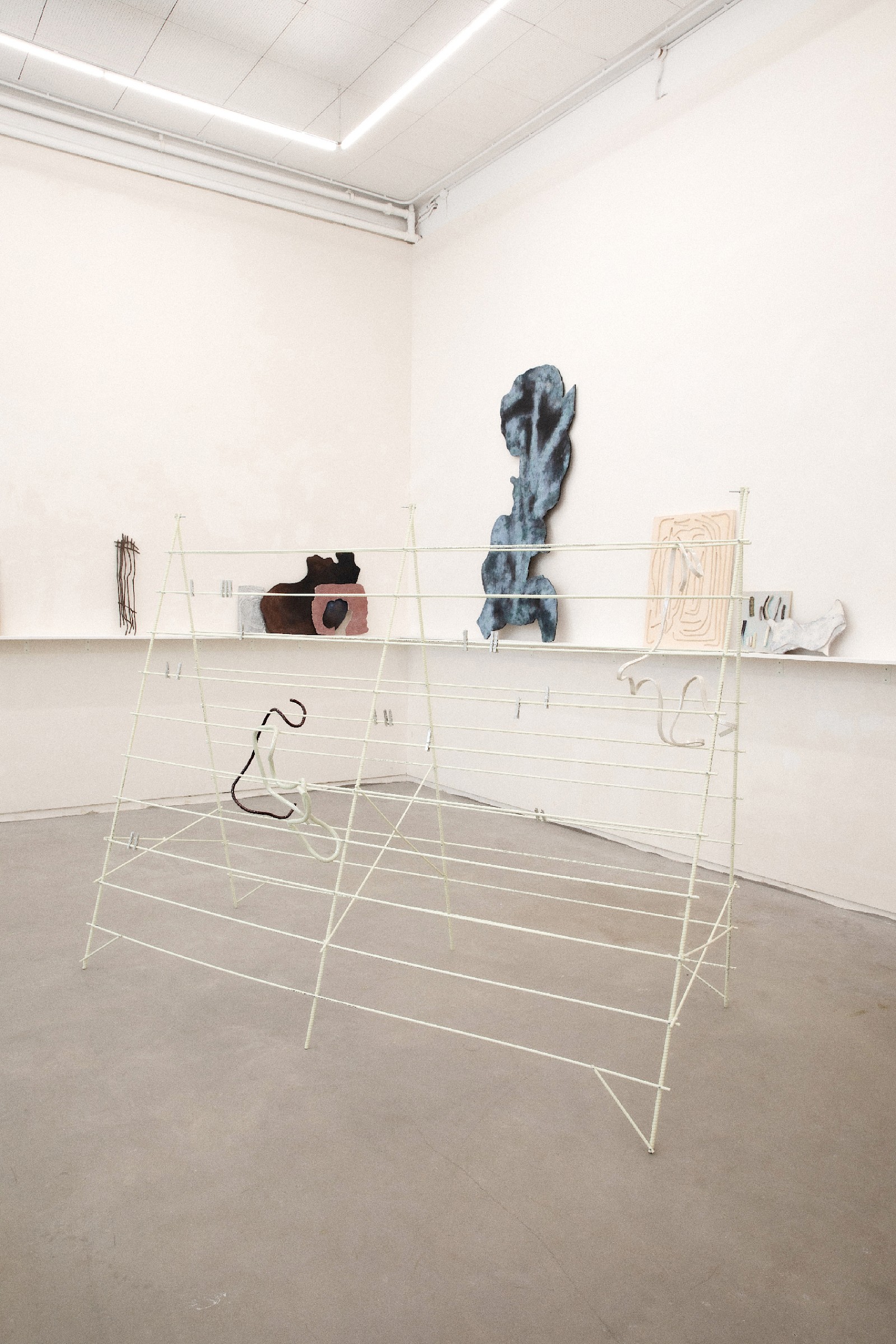
Installation view
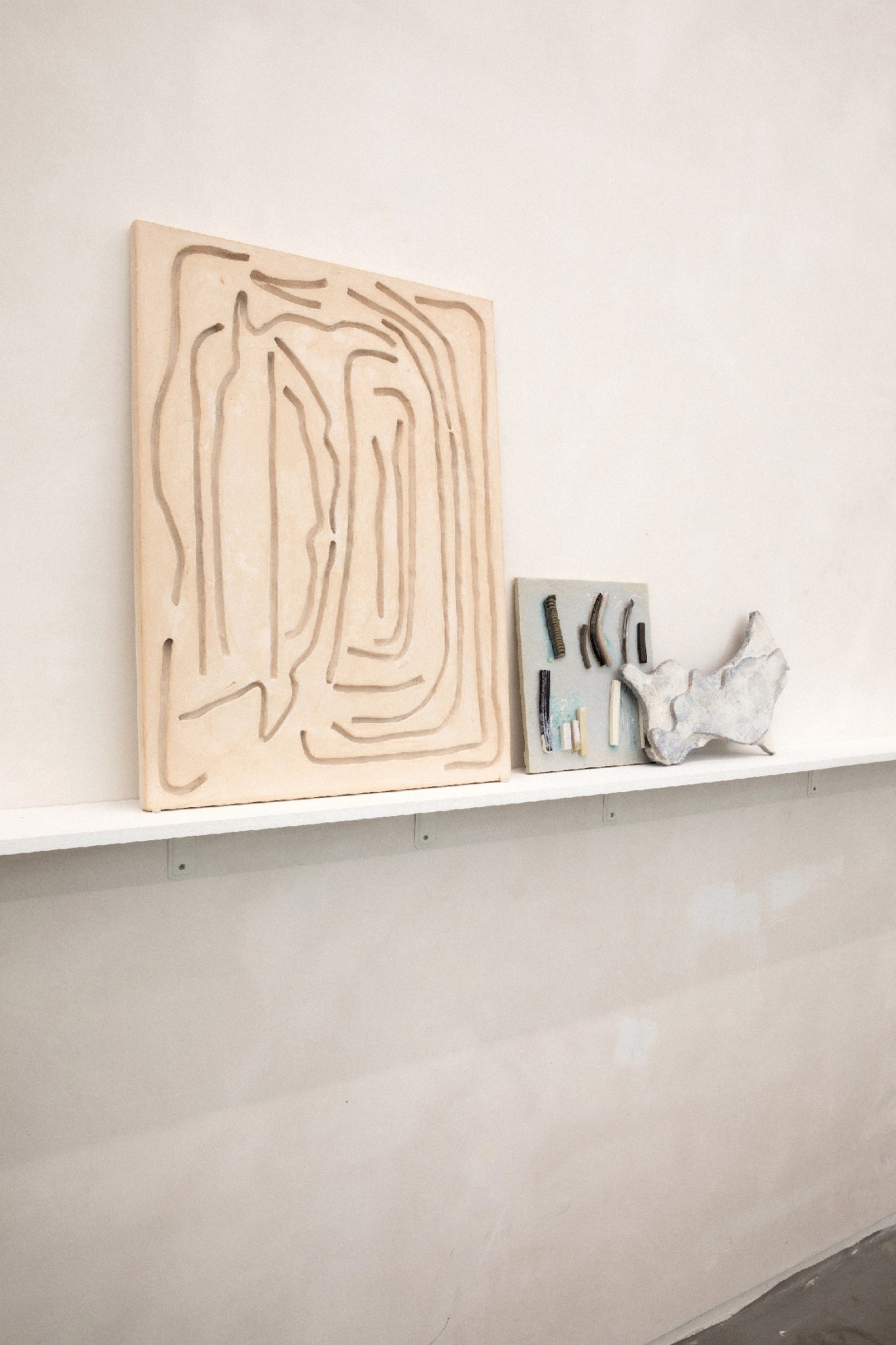
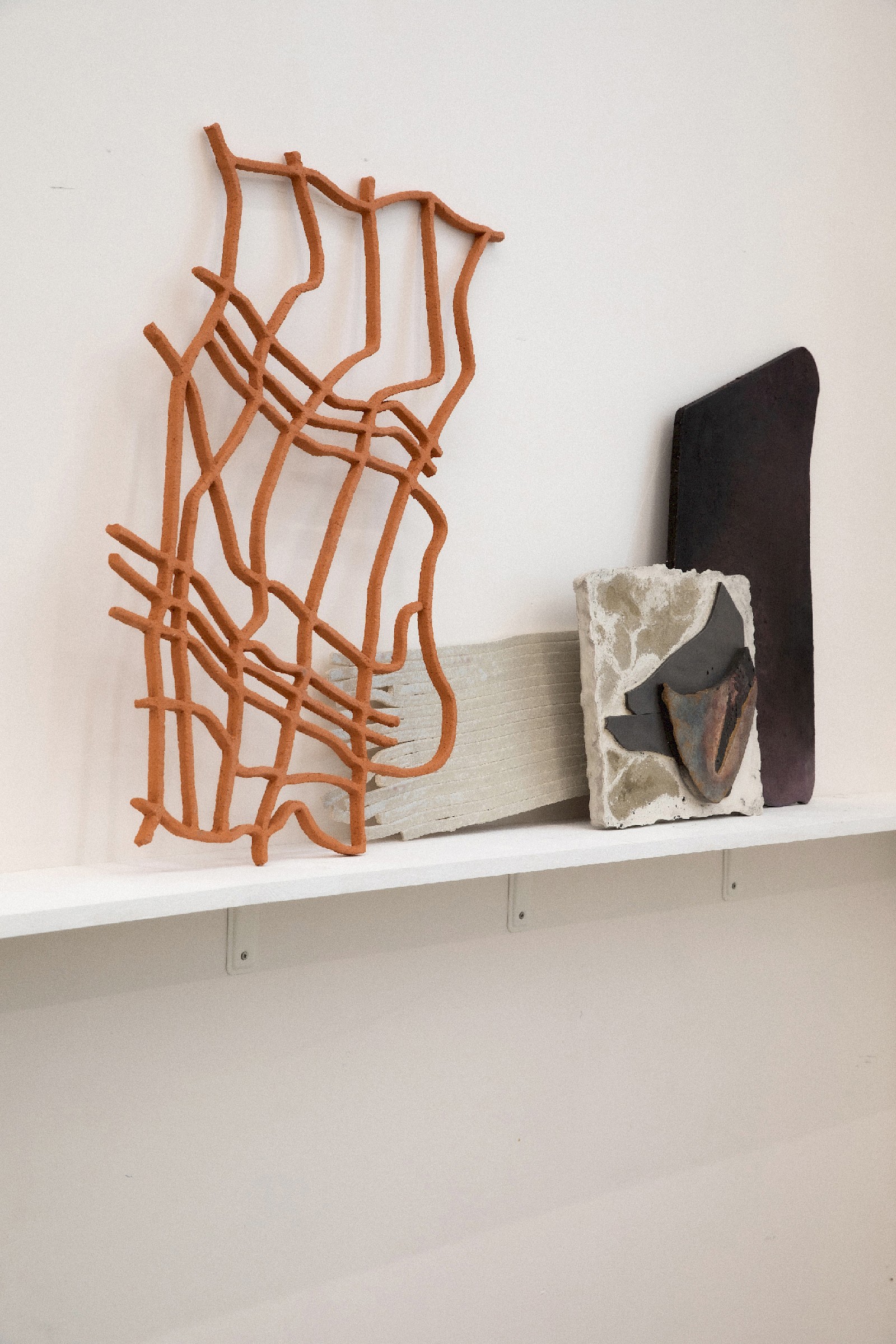
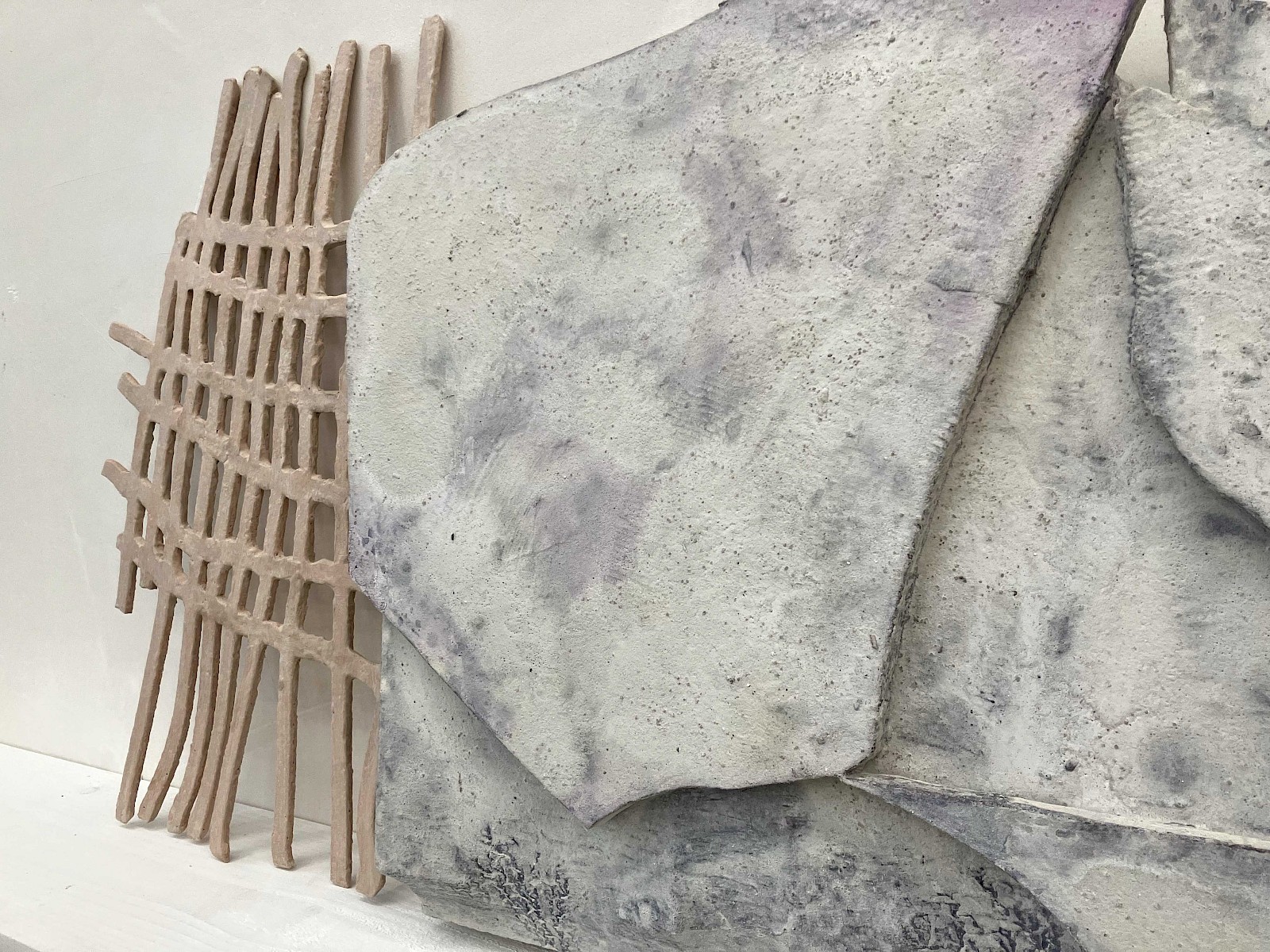
Ceramics, plaster, wood
Additional porgram:
Talk with Line Arngaard and the artists
Saturday 7 November, from 4–5:30pm
Line Arngaard is the editor and designer of the publication ‘Piecing Pages’. The conversation brings together artistic and curatorial perspectives on fragments and working across disciplines. (www.linearngaard.com @linearngaard)
An Artists’ Book Salon
Sunday 8 November, from 3–5pm.
Talks with the artists: Alex Farrar (www.alexfarrar.eu @alexfarrar), Christine Moldrickx (www.christinemoldrickx.com) and Charlott Weise (www.charlottweise.com @charlottweise)
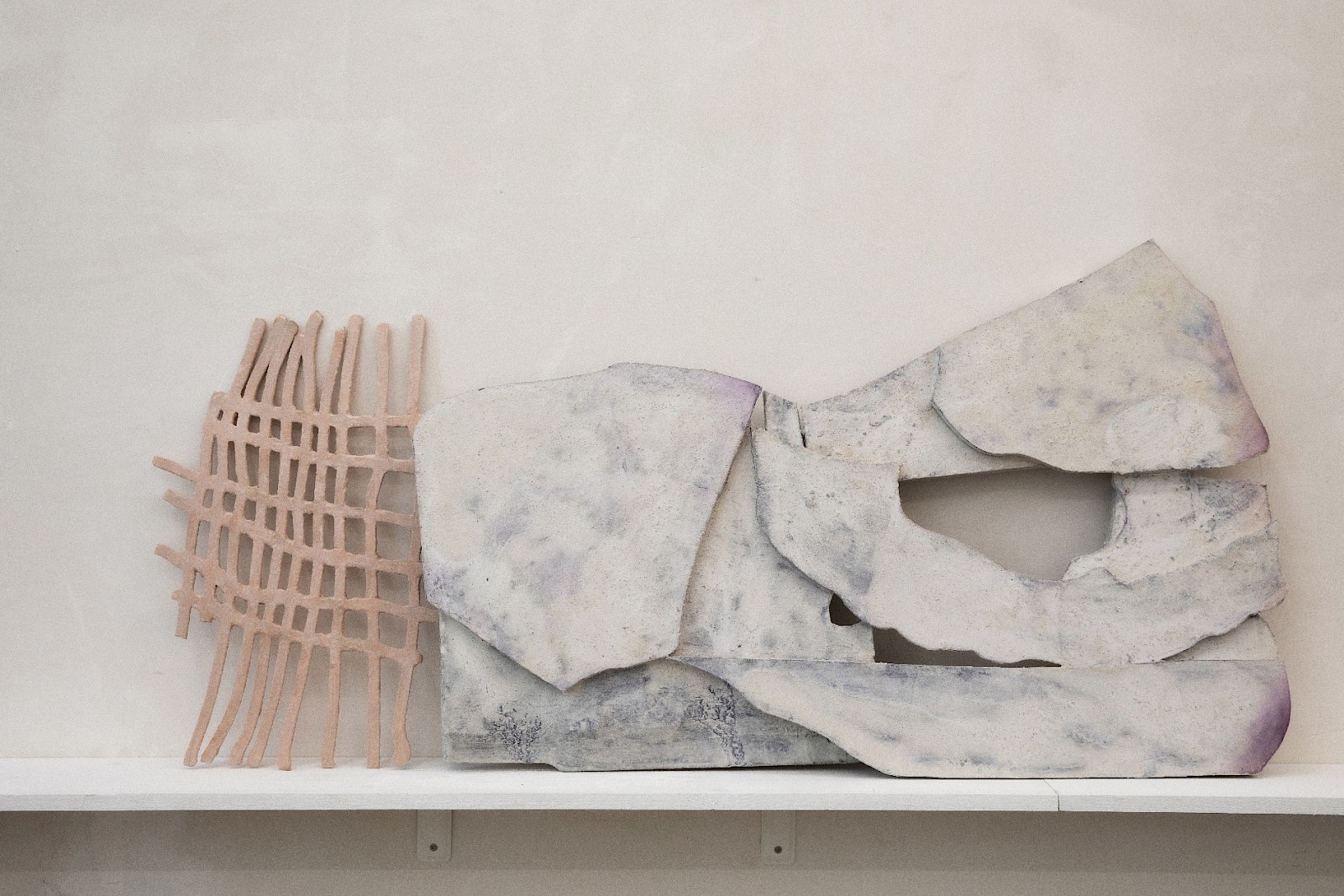
(SB) Skin weave, Stoneware, 55 x 40 x 0.5 cm, 2021. (CEM) Fragen.Fallen I. Wood, textile, old paintings, screws, wood glue, reinforcing mortar, acrylic paint, 62 x 98 x 7 cm, 2026